
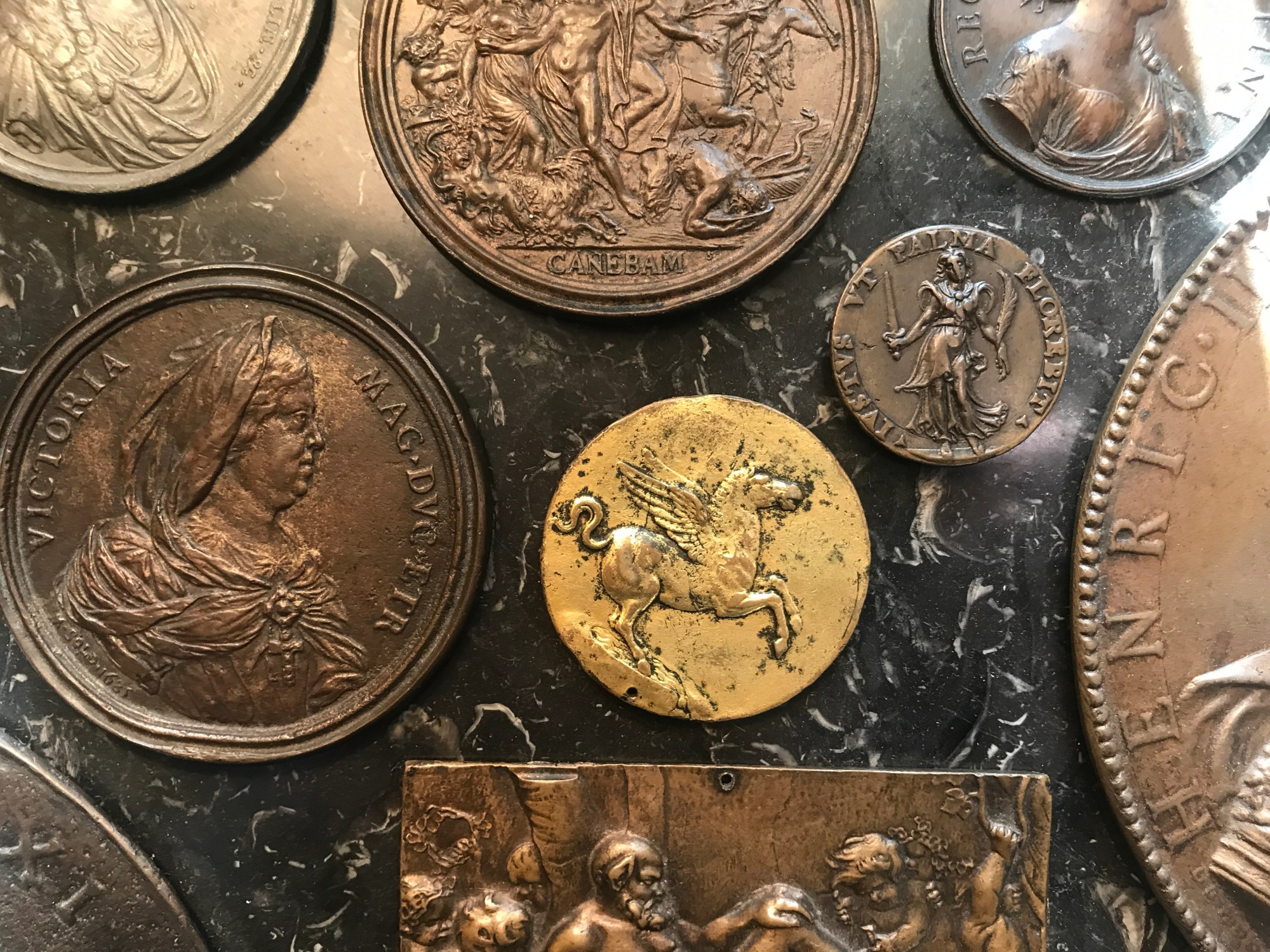
Renaissance medals and plaquettes are memorials of famous men and women of the fifteenth & sixteenth centuries. Portrait medals appeared in Italy in the 1430s as a result of an increased awareness of individual human excellence or personal virtù which resulted in the desire to be remembered for posterity. One original way to attain earthly immortality was through the portrait medal, which was small, durable, portable and easily reproduced. In addition, this miniature object contained a wealth of information about the person represented.
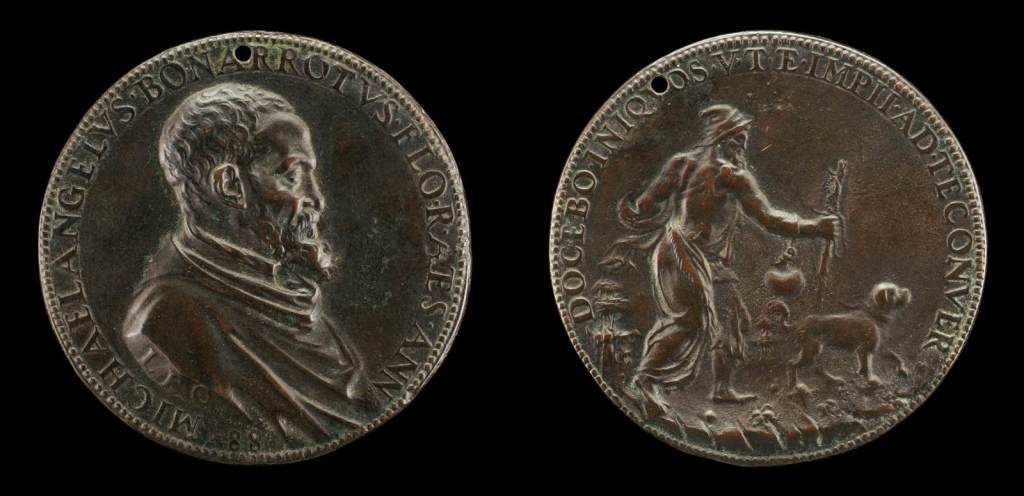
In a world before photography they satisfied a human desire to know what the famous men and women of the world looked like. They also made fantastic gifts; this is clear from a letter that the artist Leone Leoni wrote to Michelangelo on March 14, 1561. Leoni, who deeply admired the elderly artist, made a portrait medal of him on the occasion of his birthday, and sent him four copies, two in silver and two in bronze. He wrote:
“The one which is in the box is all cleaned. Keep it and look after it for love of me. Do with the other three what seems right to you. In my ambition, I have sent some to Spain and Flanders, and likewise through love have sent some to you in Rome and to other places.”
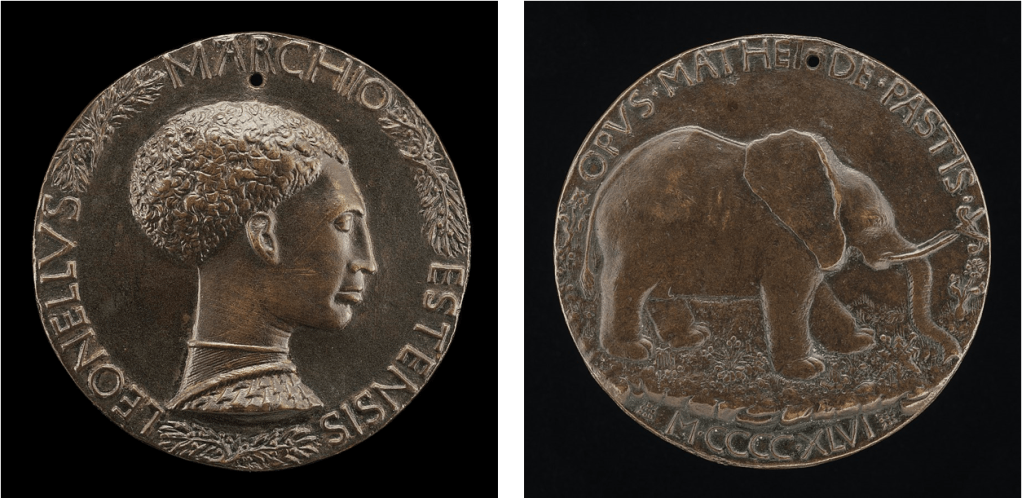
The popular form of the Renaissance portrait medal was invented by Pisanello in the 1430s. Pisanello medal of Leonello d’Este emulates ancient Roman coins by presenting the sitter in profile. Unlike coins, medals were not intended to circulate as currency and thus are not bound to specifications of weight and material. Allegorical images on the reverse of medals were meant to be interpreted by their collectors. In the case of the Leonello d’Este medal, the reverse depicting two men carrying baskets of olive branches symbolizes the blessings of peace, alluding to the good governance of Leonello, who served as marquis of Ferrara from 1441 to 1450. The inscription on the reverse declares the medal to be “the work of Pisanello the painter.” Obverse portraits could be combined with different reverses, so that an individual could highlight various aspects of his or her persona by commissioning multiple medals.
Some medalists were specialists but most were famous sculptors who made medals at the behest of important patrons. The best medalists (in our opinion) include Pisanello, Matteo di Pasti, Bertoldo (there was a recent exhibition on him at the Frick), Filarete, Leone Leoni, Adriano Fiorentino, Jacopo da Trezzo, Alfonso Ruspagiari and the Germans Hans Schwarz and Hans Reinhart the Elder. Later on Giullaume Dupre in France produced some extraordinary medals for the French court and a century after that Soldani-Benzi and his followers such as Antonio Selvi reinvigorated the medium.
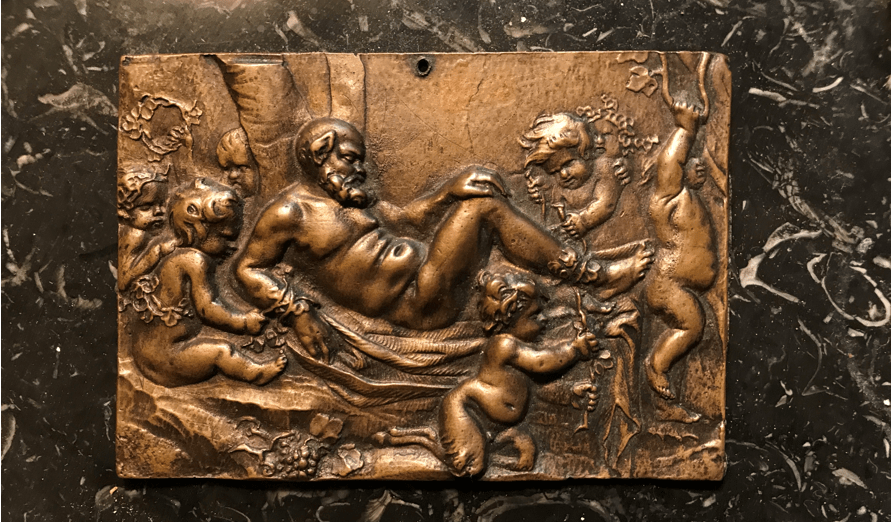
The most successful portrait medals convey the artist’s skill in composing complex and balanced designs within the confines of a tiny circle, through the use of elegant lettering, sensitive portraiture, subtle modeling of forms and textures, and rich narratives. At its best, the medal embodies quintessential Renaissance values: purity of style, harmony, dignity, balance, and the gravitas regarded as an important foundation of character.
At The Battersea Gallery we have a particular interest and expertise in Renaissance medals and plaquettes. We love them as a particularly tactile and individual art form. Despite their rarity, beautiful examples by the most famous medalists can be acquired for relatively little (£500 and upwards). In the nineteenth and early twentieth century a huge number of copies were made of famous medals and it is important to be able to differentiate between these and earlier examples. This is where we can help and we are always happy to try and source particular medals for you.
 The Battersea Gallery